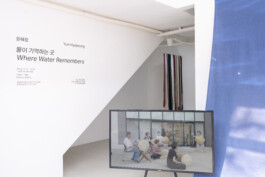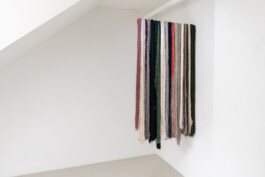
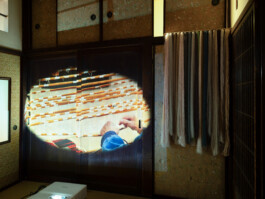
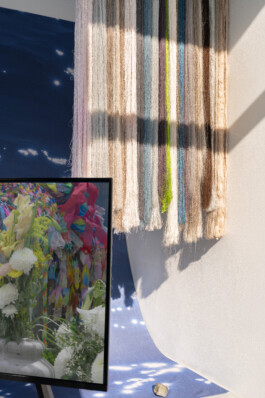
Exhibition view, KNOT: Kawaii Witches, Tokyo Biennale 2025: Ebihara Shoten, 2025, Tokyo, Japan (Photo ©Hal Xing)
Poems/texts: Hyejeong Yun, Marina Lisa Komiya, uhi, Maya Mima, BIAN KA, JHNSI, LazyBackHome
Performer: Hyejeong Yun, Marina Lisa Komiya, BIAN KA, JHNSI
Documentation: Hal Xing


ENG
Water and Womb (2025) began through a research project, Where Water Remembers (2025- ), into Zainichi Korean (Japanese Korean) communities who once lived and worked near rivers and watersides in Japan. Yun traced the sites of (forced) migration and labour from colonialisation. In Kyoto, Yun met and interviewed an elderly man whose Korean family had woven obi sashes for kimonos in Nishijin in multigenerational families. When turned over, those obi reveal threads that ripple like seawater — like hair soaked in rain. That texture between fabric, body, and memory became the origin of this piece.
Yun invited seven artists, researchers, thinkers, and activists to a poetry writing workshop regarding Grandpa Kim's stories and her research about the Korean-Japanese community in Japan. During the workshop the participants co-write texts of Sisterhood, motherhood, being floating, warmth, water, comforting, comb hair girlsqueers, the hair between fingers, silk, space division, thread from Nishijin, care, caregiver, multiple bodyness, (non)physical attachment, sitting around people, touch, while someone was reading and breathing, intergenerational memory and community, oral history, stories from someone to someone, and collective trauma.
국문
⟪물과 자궁 Water and Womb⟫은 일본의 강가와 물가 주변에서 삶을 꾸려온 재일조선인 공동체를 탐구하는 리서치 프로젝트 ⟪물이 기억하는 곳 Where Water Remembers (2025– )⟫에서 비롯되었다. 작가는 식민화의 과정 속에서 이루어진 (강제) 이주와 노동의 장소들을 따라갔다. 교토에서 그는 니시진에서 여러 세대에 걸쳐 기모노 오비를 짜온 조선인 가족의 역사를 지닌 한 노인을 만나 인터뷰하였다. 오비의 뒷면에는 바닷물결처럼, 혹은 비에 젖은 머리카락처럼 출렁이는 실들이 드러난다. 직물과 몸, 기억 사이에 놓인 그 감각적 질감이 이 작업의 시작이 되었다.
작가는 김 할아버지의 이야기와 일본 내 한인/조선인 공동체에 대한 리서치를 바탕으로, 일곱 명의 예술가, 연구자, 사상가, 활동가를 시 쓰기 워크숍에 초대하였다. 그 자리에서 참여자들은 시스터후드와 모성, 떠다님과 온기, 물과 위로, 머리를 빗는 몸들, 소녀와 퀴어, 손가락 사이의 머리카락, 실크와 공간의 분할, 니시진의 실, 돌봄과 돌보는 몸, 복수의 몸성, 물리적이거나 비물리적인 접촉, 곁에 함께 앉아 있기, 누군가의 낭독과 호흡, 세대 간 기억과 공동체, 구술사, 사람에서 사람으로 이어지는 이야기, 그리고 집단적 트라우마에 관한 텍스트를 함께 썼다.
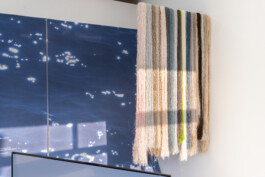
Performance, «Water and Womb (2025)», 2025, Mikke gallery, Tokyo, Japan (Photo ©Hal Xing)


Exhibition view, «Water and Womb I, II (2025)», 2025, Forever gallery, Seoul, South Korea (Photo ©Miji Ih)

Exhibition view, KNOT: Kawaii Witches, Tokyo Biennale 2025: Ebihara Shoten, 2025, Tokyo, Japan (Photo ©Hal Xing)
Poems/texts: Hyejeong Yun, Marina Lisa Komiya, uhi, Maya Mima, BIAN KA, JHNSI, LazyBackHome
Performer: Hyejeong Yun, Marina Lisa Komiya, BIAN KA, JHNSI
Documentation: Hal Xing


ENG
Water and Womb (2025) began through a research project, Where Water Remembers (2025- ), into Zainichi Korean (Japanese Korean) communities who once lived and worked near rivers and watersides in Japan. Yun traced the sites of (forced) migration and labour from colonialisation. In Kyoto, Yun met and interviewed an elderly man whose Korean family had woven obi sashes for kimonos in Nishijin in multigenerational families. When turned over, those obi reveal threads that ripple like seawater — like hair soaked in rain. That texture between fabric, body, and memory became the origin of this piece.
Yun invited seven artists, researchers, thinkers, and activists to a poetry writing workshop regarding Grandpa Kim's stories and her research about the Korean-Japanese community in Japan. During the workshop the participants co-write texts of Sisterhood, motherhood, being floating, warmth, water, comforting, comb hair girlsqueers, the hair between fingers, silk, space division, thread from Nishijin, care, caregiver, multiple bodyness, (non)physical attachment, sitting around people, touch, while someone was reading and breathing, intergenerational memory and community, oral history, stories from someone to someone, and collective trauma.
국문
⟪물과 자궁 Water and Womb⟫은 일본의 강가와 물가 주변에서 삶을 꾸려온 재일조선인 공동체를 탐구하는 리서치 프로젝트 ⟪물이 기억하는 곳 Where Water Remembers (2025– )⟫에서 비롯되었다. 작가는 식민화의 과정 속에서 이루어진 (강제) 이주와 노동의 장소들을 따라갔다. 교토에서 그는 니시진에서 여러 세대에 걸쳐 기모노 오비를 짜온 조선인 가족의 역사를 지닌 한 노인을 만나 인터뷰하였다. 오비의 뒷면에는 바닷물결처럼, 혹은 비에 젖은 머리카락처럼 출렁이는 실들이 드러난다. 직물과 몸, 기억 사이에 놓인 그 감각적 질감이 이 작업의 시작이 되었다.
작가는 김 할아버지의 이야기와 일본 내 한인/조선인 공동체에 대한 리서치를 바탕으로, 일곱 명의 예술가, 연구자, 사상가, 활동가를 시 쓰기 워크숍에 초대하였다. 그 자리에서 참여자들은 시스터후드와 모성, 떠다님과 온기, 물과 위로, 머리를 빗는 몸들, 소녀와 퀴어, 손가락 사이의 머리카락, 실크와 공간의 분할, 니시진의 실, 돌봄과 돌보는 몸, 복수의 몸성, 물리적이거나 비물리적인 접촉, 곁에 함께 앉아 있기, 누군가의 낭독과 호흡, 세대 간 기억과 공동체, 구술사, 사람에서 사람으로 이어지는 이야기, 그리고 집단적 트라우마에 관한 텍스트를 함께 썼다.
Performance, «Water and Womb (2025)», 2025, Mikke gallery, Tokyo, Japan (Photo ©Hal Xing)


Exhibition view, «Water and Womb I, II (2025)», 2025, Forever gallery, Seoul, South Korea (Photo ©Miji Ih)